

















Star Micronics GB Limited | info@stargb.com
The Name in Sales of Sliding Head Technology
Machine Search:     

Newsletter

To subscribe to our email newsletter enter your email address below:

Read the
latest
Info Star

Click here to view the latest Star GB email newsletter from your browser!

rss feed RSS Feed

Click here to view the Star GB RSS feed!

Kirkstall Precision

Kirkstall Precision Installation from Star GB

In December 2010, John Thornton and Tim Buckley took full control of Kirkstall Precision, a subcontract machining facility in Leeds, following a management buyout three years earlier.

The company has since expanded the range of work it carries out for the medical, nuclear, aerospace, petrochemical, textile and electronics industries. It is also benefitting from a higher level of activity on the assembly side of the business, with complete packages of equipment supplied to many of its customers.

The supply of surgical instruments and other high precision medical components accounts for 90 per cent of turnover, according to Mr Thornton, who is now the managing director. The company is well on the way to achieving ISO 13485 2003, the quality management standard for medical devices.

Component complexity is increasing all the time, but batch sizes tend to stay the same or decrease, which means that more and more time was being spent repeatedly setting up jobs on conventional machine tools. It was not unusual for a component to visit, for example, a milling machine, a wire eroder, a 4-axis machining centre and a lathe before it was finished.

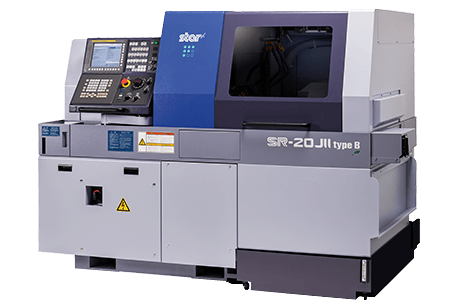
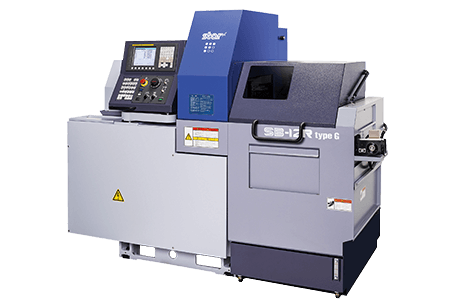
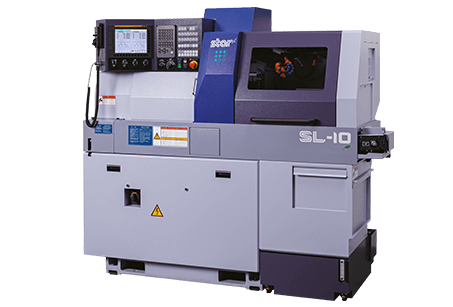
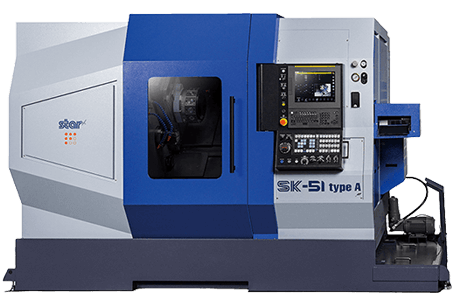
Since the arrival of two twin-spindle, sliding-head, multi-axis mill-turning centres from Star, an SR-20RIII in 2009 and an SB-16E a year later, parts that previously needed multiple operations are produced from bar in one operation. Not only is productivity increased, but also the frequent changeovers for producing batches as low as 10-off are much faster when there is one machine to set rather than four.

"The advantages of one-hit machining are significant, both for us and our customers," says Mr Thornton.

"For a start, we achieve the required accuracies easily without tolerance build-up between ops. We regularly hold the position of a cross-hole to a shoulder, for instance, to within 25 microns total.

"The rigidity of the Stars and the absence of play in the axis movements allows very fine features to be machined accurately we currently have a job going through that needs a 0.19 mm hole drilled.

"Labour savings are considerable due to the reduction in set-ups, so we are able to hold down prices, and there is no work-in-progress to manage.
"Material savings are also evident. Whereas to produce a batch of 50 we often lost 10 to 20 per cent in the process, now every part is good."

Mr Thornton went on to say that with batch runs normally in tens rather than 1,000s, there is a tendency to think that sliding-headstock bar automatics are not the way to go. He and his co-director, Tim Buckley thought differently, however.

Star GB took their interest seriously during initial discussions and helped to formulate their ideas on the savings that would be possible. The approach was in contrast to that of other potential lathe suppliers and is the reason Kirkstall Precision chose Star.
Originally established in 1988, the ISO 9000-registered subcontractor provides a full service to its customers, from problem-solving consultancy and computer-aided design through prototyping and batch manufacture to on-time delivery.

Within its 8,000 sq ft facility is to be found a wide variety of CNC production plant for milling, turning, wire eroding and grinding, underpinned by laser marking, finishing, heat treatment and both CMM and conventional inspection in a temperature controlled QA department.

Back To Testimonials